
Carrie3372/Shutterstock
“Dime a dozen” is one of the most unique phrases in English. Its catchy, everyone knows it, and its incredibly versatile in its usage. However, most people don’t know where it comes from. Let’s find out!
Universal “Dime A Dozen”

Before we dig into the history of “dime a dozen,” let’s first figure out exactly what it means. In case you don’t know, a “dime a dozen” is an idiom that means that something is quite easy to find or obtain. Since the object in question is easy to find or obtain, it does not have much value! You might use the idiom in sentences like: “In Florida, during orange season, oranges go for a dime a dozen in the state” or “That liar’s stories are worth a dime a dozen.”
As you can see in the examples above, “dime a dozen” remains one of the most interesting idioms in the English language as speakers can use it positively or negatively. In the orange example, the saying is a good thing! Who doesn’t want fresh, delicious oranges for just a little bit of money? However, in the other examples, its nearly an insult! Since the liar in question lies so much, every story they say, including the true ones, are cheap and invaluable. Similar phrases include “bought for a song” and “run of the mill.”
Now that you know how to use this fantastic phrase, its time to learn where “dime a dozen” came from…
The Origins
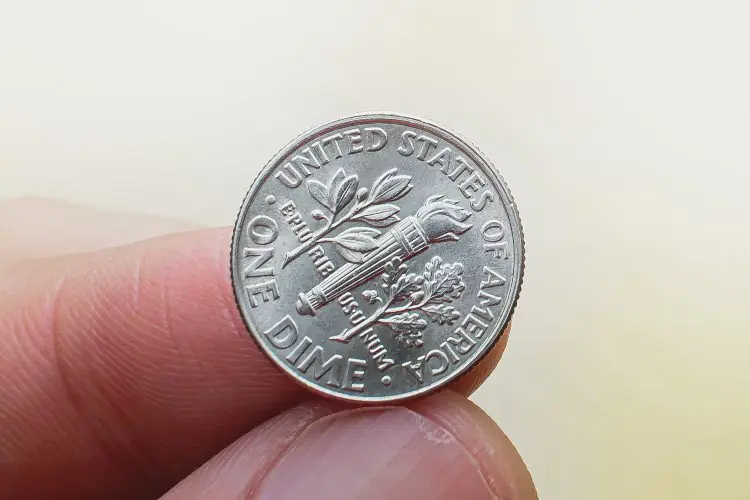
Of course, the phrase had to crop up after the United States introduce the dime in 1796. Soon enough, people started selling their goods for, you guessed it, “a dime a dozen.” As you might have guessed, it started off as only a good thing – after all, it meant you were getting a good deal! However, over time, the idiom started to evolve to mean quite the opposite. Usually, these days, instead of meaning a good deal, the phrase has started to describe cheap things in a negative way. The first time someone used it in a negative way seems to have been in print in 1930. Since then, people have started using the phrase more and more in a negative context.
Remember: use “dime a dozen” in a proper context. Otherwise, you might insult someone by accident by calling them a “dime a dozen,” even if it was meant to sound like a compliment.
Sources: The Free Dictionary, MSN Kids.